The reasoning
Ledgers look backward
Budgeting software is almost universally retrospective: it answers "where did the money go?" long after the answer could change anything.
A monthly total can look safe while the month itself is not. Income lands late, bills cluster early and a payment that is affordable at month end is impossible on the day it actually falls.
ClearBudget looks forward
It asks: will the month survive? The balance is projected day by day, bill by bill and card by card, with credit cards treated as pressure systems rather than static balances.
The headline is the most actionable form that answer takes: Safe to Spend Today, the most you could spend right now while every month ahead that holds on its own keeps every one of its days above what the budget has to keep back. A later month that is short whatever you do is named on a line of its own rather than allowed to cancel the figure.
That is not one number for every day. Your buffer is held on every day alike; a bill you pay once a year is held back a little more each month it gets closer, because it is not a surprise, it is a bill you have not been asked for yet. A figure that counted that money as spendable would be confidently wrong.
When a month ahead cannot hold, the Recommendations view says what would make it survivable: retime what can move, then find what no timing replaces, every figure measured against the same projection.
It will also offer to stop setting money aside, priced honestly: a pause does not find money, so the suggestion states what the month the bill falls due in then arrives short by. It suggests and never applies; the app follows reality rather than leading it.
Checkable, not taken on trust
The same projection can be read as a graph or exported as a self-contained page whose table adds up row by row, so a claim about your money can be checked against a bank statement.
One deliberate exception: the current month opens from the balance you actually recorded, not the previous month's projected close. The recorded balance is the only figure that is a fact; the gap between the two is exactly the drift the report exists to show you.
Dogfood
This is the application I open to decide whether my own month holds together, which is the surest way I know to keep a solvency tool honest.
The same standard applies to using it: one keyboard path through every screen, one place a colour can come from, one meaning for a ring around a control.
Built like the apps I trust
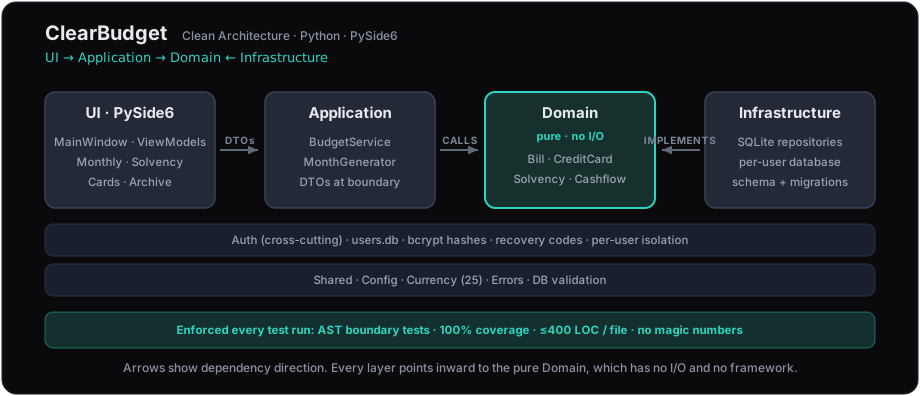
When software is telling you whether the balance survives the month, approximately right is wrong. So the projection logic sits in a pure domain that no UI event or database write can reach into, inside a four-layer architecture with every dependency pointing inward.
Structural tests, 100% line and branch coverage of everything outside the interface code and a 400-line file limit hold the line on every run, over the setup program as well as the application, with a no-magic-numbers rule the code is written and reviewed against.